Springshed revival and management
Spring inventories, hydrogeology, community governance and repeat monitoring. Geology and water rights must be established locally; no generic recharge trenches.
KVI-15 · Rivers & springs
Establish where abstraction or surface sealing threatens recharge; keep interventions tied to hydrogeology.
UNDERSTANDING THE ISSUE
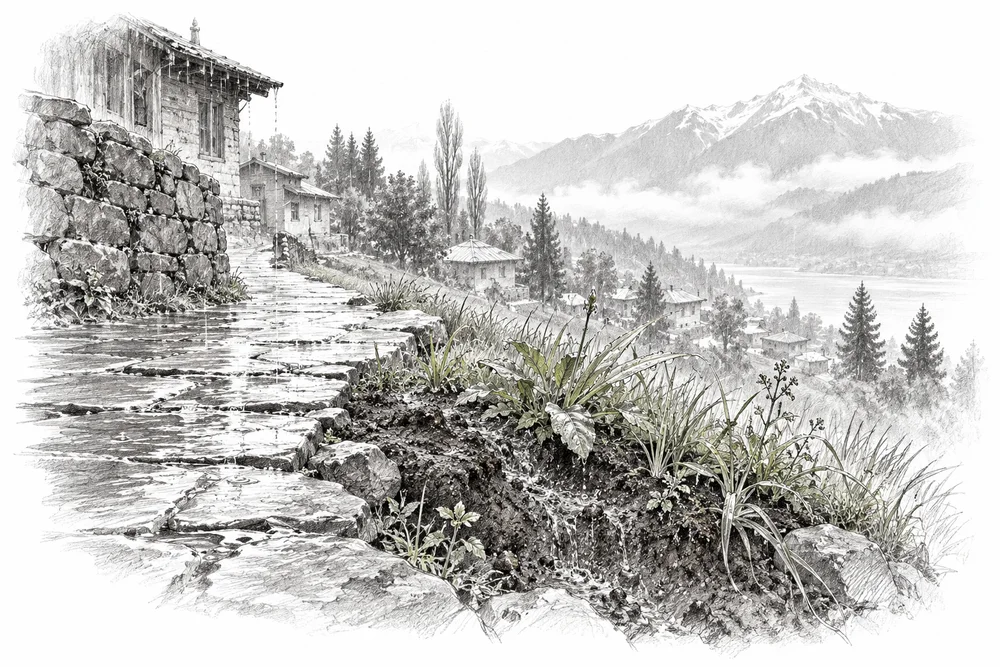
Groundwater pressure and lost recharge are plausible concerns, but the current evidence does not establish their extent at a proposed site. A recharge intervention requires knowledge of geology, groundwater movement, abstraction and water quality.
This opportunity begins with checking whether the suspected problem is present and significant at a named site. A field baseline, the relevant technical partners and local priorities would determine whether CCK should develop it further.
Flow, water quality and habitat connections need to be understood together.
Water users and land managers hold knowledge essential to a workable project.
A single visit cannot describe a river or spring through its annual cycle.
PROPOSED APPROACH
Establish where abstraction or surface sealing threatens recharge; keep interventions tied to hydrogeology.
Assemble well or spring records, abstraction information and a hydrogeological account of the candidate area.
Evaluate protection of a confirmed recharge zone with landowners and qualified water specialists.
Select groundwater or spring indicators and track water quality as well as quantity.
Assemble well or spring records, abstraction information and a hydrogeological account of the candidate area. Keep methods, dates, source records and unresolved questions together.
Evaluate protection of a confirmed recharge zone with landowners and qualified water specialists. Identify responsibilities, permissions, costs and continuing care before proceeding.
Select groundwater or spring indicators and track water quality as well as quantity. State what would count as success, failure or a reason to change course.
To investigate
Risk or delivery gap to investigate; listed sources supply context and do not establish its local extent.
258 Kashmir Valley springs
Publisher full page checked. Reference checked 2026-10-30. Context for screening; this source does not establish the local extent of the proposed issue.
Srinagar; Landsat 1992-2020
Indexed primary-study abstract checked. Reference checked 2026-10-30. Context for screening; this source does not establish the local extent of the proposed issue.
These references offer methods to assess locally. They do not establish what will work at a selected Kashmir site.
Spring inventories, hydrogeology, community governance and repeat monitoring. Geology and water rights must be established locally; no generic recharge trenches.
Source-water partnerships and long-term catchment funding. Transfer the stewardship and finance logic; do not transplant budgets or Andean species.
KVI-09 Local evidence
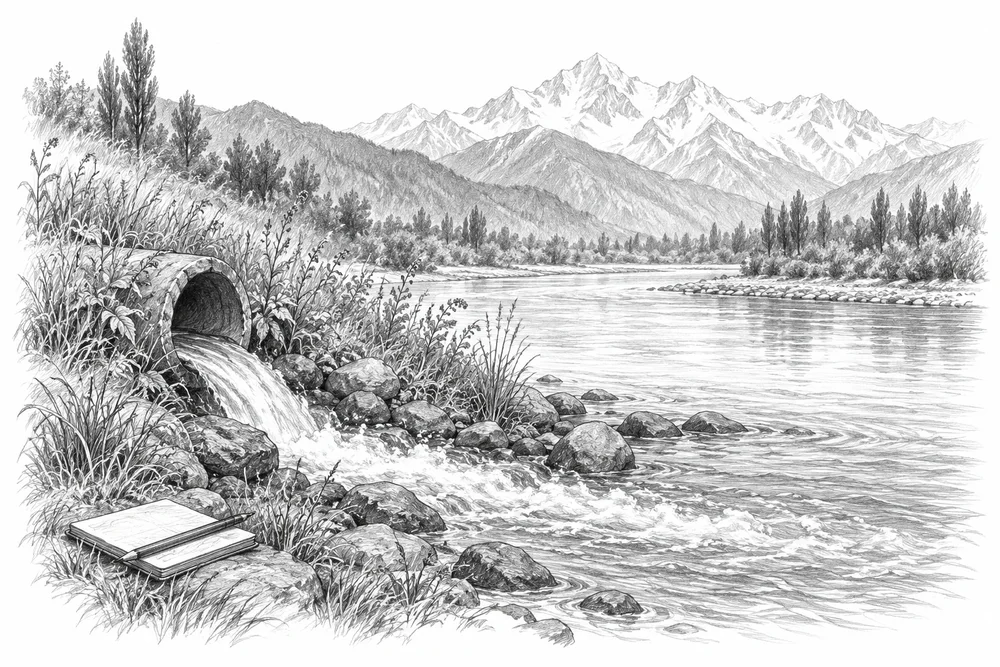
Build a drain-to-river inventory for a defined reach and follow the dominant pollution sources through to treatment options.
Explore the opportunity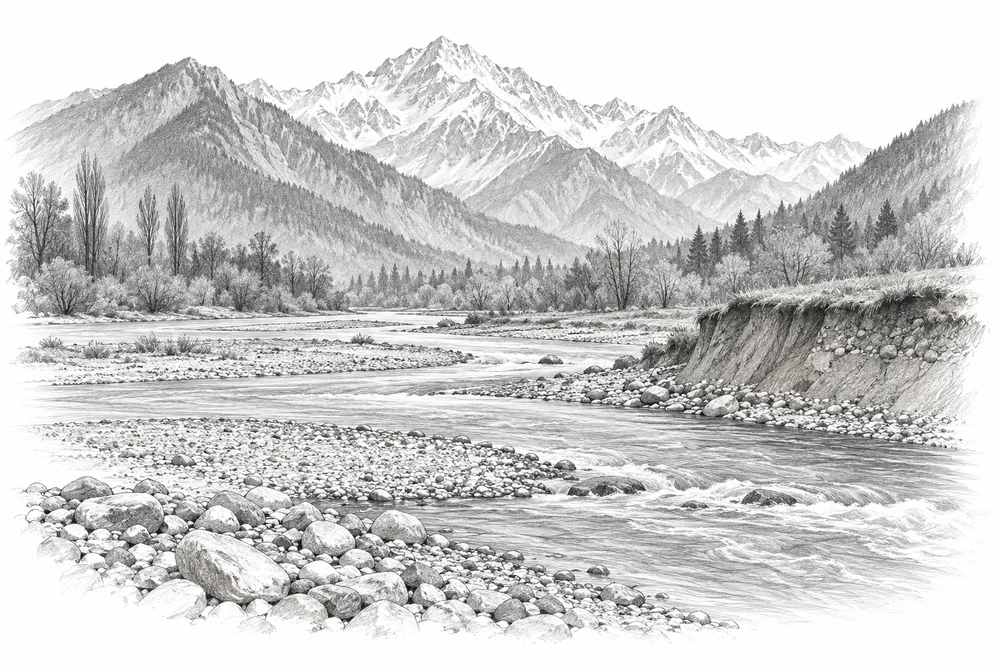
KVI-10 Local evidence
Document changes to selected extraction reaches and fish habitat to support evidence-based restoration discussions.
Explore the opportunity
KVI-11 Local evidence
Develop native riparian habitat pilots from local reference vegetation, while retaining channel and flood safety.
Explore the opportunityThis is a research and project proposal. The illustration is an editorial concept, not evidence of current site conditions or completed work.