Springshed revival and management
Spring inventories, hydrogeology, community governance and repeat monitoring. Geology and water rights must be established locally; no generic recharge trenches.
KVI-14 · Rivers & springs
Protect specific spring heads and contributing areas using water-quality evidence and local water-user participation.
UNDERSTANDING THE ISSUE
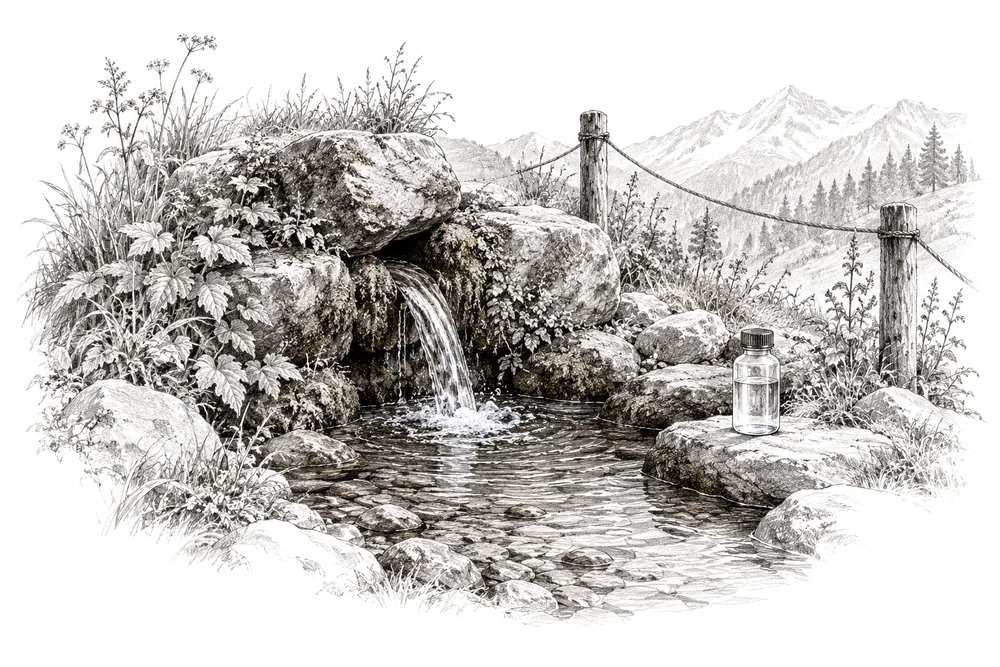
Spring-water quality varies between places and through time. Kashmir studies provide useful chemical baselines, but a favourable chemical water-quality index does not establish microbial safety or remove the need to examine nearby contamination routes.
The first phase would turn this broad issue into a bounded site investigation. Current condition, the cause of change and an accountable local partnership would guide whether an intervention is appropriate.
Flow, water quality and habitat connections need to be understood together.
Water users and land managers hold knowledge essential to a workable project.
A single visit cannot describe a river or spring through its annual cycle.
PROPOSED APPROACH
Protect specific spring heads and contributing areas using water-quality evidence and local water-user participation.
Map the spring head, sanitation, drainage and land uses, with appropriate chemical and microbial tests.
Agree source-protection and maintenance actions with water users and the responsible service body.
Repeat the tests suited to the identified risk, including after relevant seasonal events.
Map the spring head, sanitation, drainage and land uses, with appropriate chemical and microbial tests. Keep methods, dates, source records and unresolved questions together.
Agree source-protection and maintenance actions with water users and the responsible service body. Identify responsibilities, permissions, costs and continuing care before proceeding.
Repeat the tests suited to the identified risk, including after relevant seasonal events. State what would count as success, failure or a reason to change course.
Local evidence
A locally relevant topic is documented by a cited source; current severity and site feasibility remain unassessed.
258 Kashmir Valley springs
Publisher full page checked. Reference checked 2026-10-30. Site, time period and methods limit how this evidence can be applied to a new project.
30 Anantnag springs
Publisher indexed abstract checked. Reference checked 2026-10-30. Site, time period and methods limit how this evidence can be applied to a new project.
These references offer methods to assess locally. They do not establish what will work at a selected Kashmir site.
Spring inventories, hydrogeology, community governance and repeat monitoring. Geology and water rights must be established locally; no generic recharge trenches.
Repeatable community observations and nutrient/turbidity sampling. Volunteer observations require quality assurance and do not replace laboratory or statutory assessments.
KVI-09 Local evidence
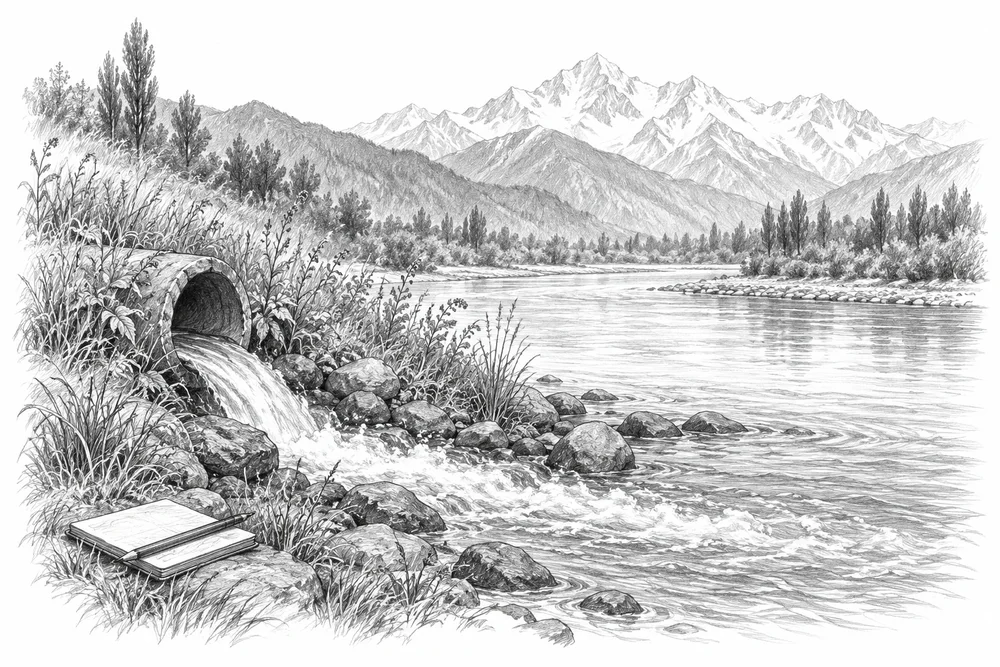
Build a drain-to-river inventory for a defined reach and follow the dominant pollution sources through to treatment options.
Explore the opportunity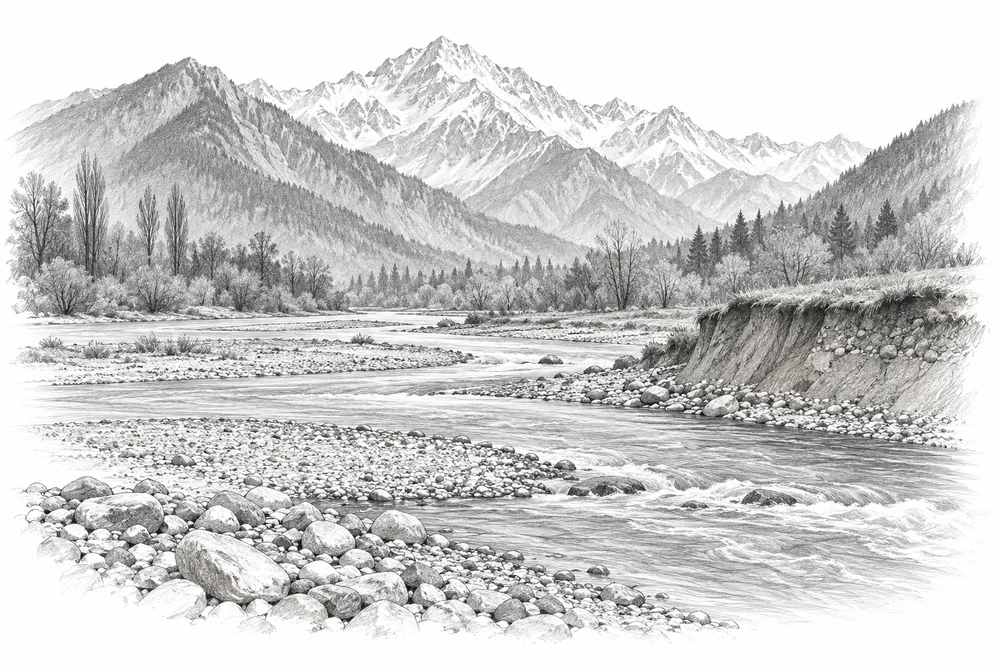
KVI-10 Local evidence
Document changes to selected extraction reaches and fish habitat to support evidence-based restoration discussions.
Explore the opportunity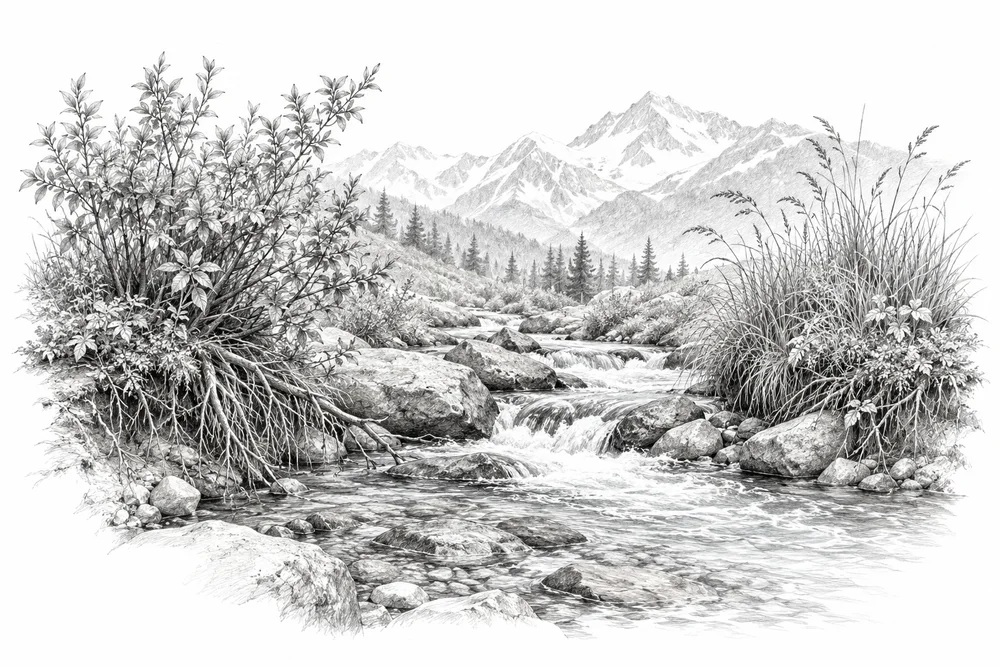
KVI-11 Local evidence
Develop native riparian habitat pilots from local reference vegetation, while retaining channel and flood safety.
Explore the opportunityThis is a research and project proposal. The illustration is an editorial concept, not evidence of current site conditions or completed work.