FreshWater Watch
Repeatable community observations and nutrient/turbidity sampling. Volunteer observations require quality assurance and do not replace laboratory or statutory assessments.
KVI-60 · Climate & water
Build a quality-controlled seasonal observation network that can show whether CCK projects change ecological condition.

UNDERSTANDING THE ISSUE
A project cannot demonstrate ecological improvement without a comparable baseline and repeat observations. This is an enabling opportunity across the catalogue: the need is a durable, quality-controlled method that fits the question and the people maintaining it.
The first phase would support a small set of real projects with agreed methods, named data custodians and repeat observations. Its value would be judged by the quality of evidence and the decisions it helps people make.
Observations need a stated place, period and method to be useful.
A project can support better evidence and practical local adaptation.
Seasonality, background influences and uncertainty belong alongside any reported change.
PROPOSED APPROACH
Build a quality-controlled seasonal observation network that can show whether CCK projects change ecological condition.
Select a small set of project questions and review the data already held by research partners.
Establish common field records, training and quality checks with a manageable observation network.
Review data completeness, repeatability and whether findings actually inform project decisions.
Select a small set of project questions and review the data already held by research partners. Keep methods, dates, source records and unresolved questions together.
Establish common field records, training and quality checks with a manageable observation network. Identify responsibilities, permissions, costs and continuing care before proceeding.
Review data completeness, repeatability and whether findings actually inform project decisions. State what would count as success, failure or a reason to change course.
Enabling project
Cross-cutting capability, not a separate ecological pressure.
Kashmir Valley; 1984-2021
Publisher abstract checked. Reference checked 2026-10-30. Site, time period and methods limit how this evidence can be applied to a new project.
258 Kashmir Valley springs
Publisher full page checked. Reference checked 2026-10-30. Site, time period and methods limit how this evidence can be applied to a new project.
Srinagar; Landsat 1992-2020
Indexed primary-study abstract checked. Reference checked 2026-10-30. Site, time period and methods limit how this evidence can be applied to a new project.
These references offer methods to assess locally. They do not establish what will work at a selected Kashmir site.
Repeatable community observations and nutrient/turbidity sampling. Volunteer observations require quality assurance and do not replace laboratory or statutory assessments.
Reference ecosystems, recovery attributes and monitoring. A framework, not evidence that a particular intervention works at a Kashmir site.
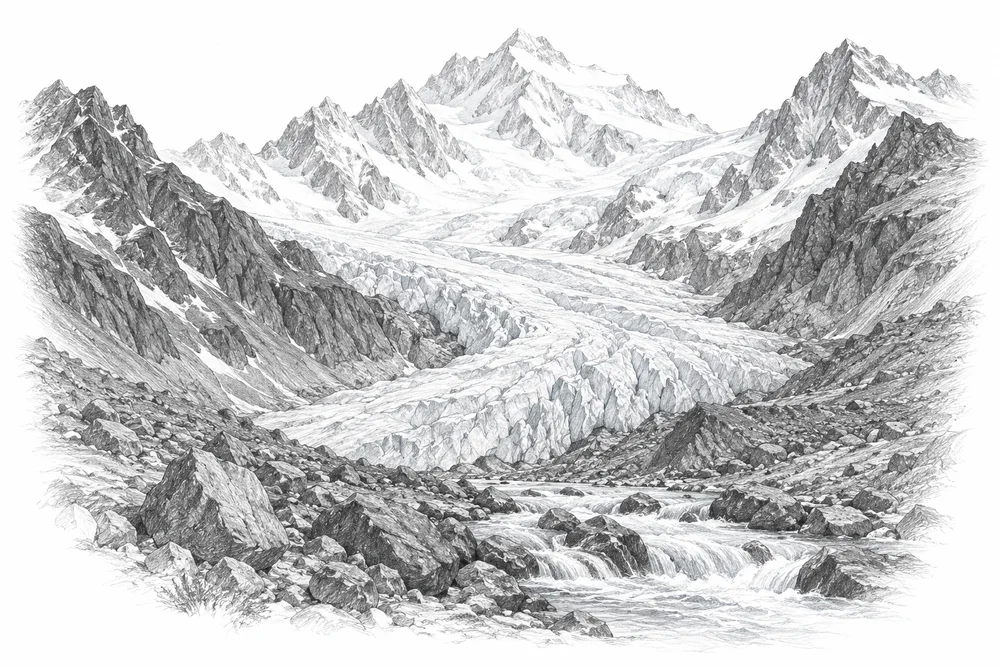
KVI-56 Local evidence
Support glacier and catchment observation partnerships and use the evidence for downstream adaptation planning.
Explore the opportunity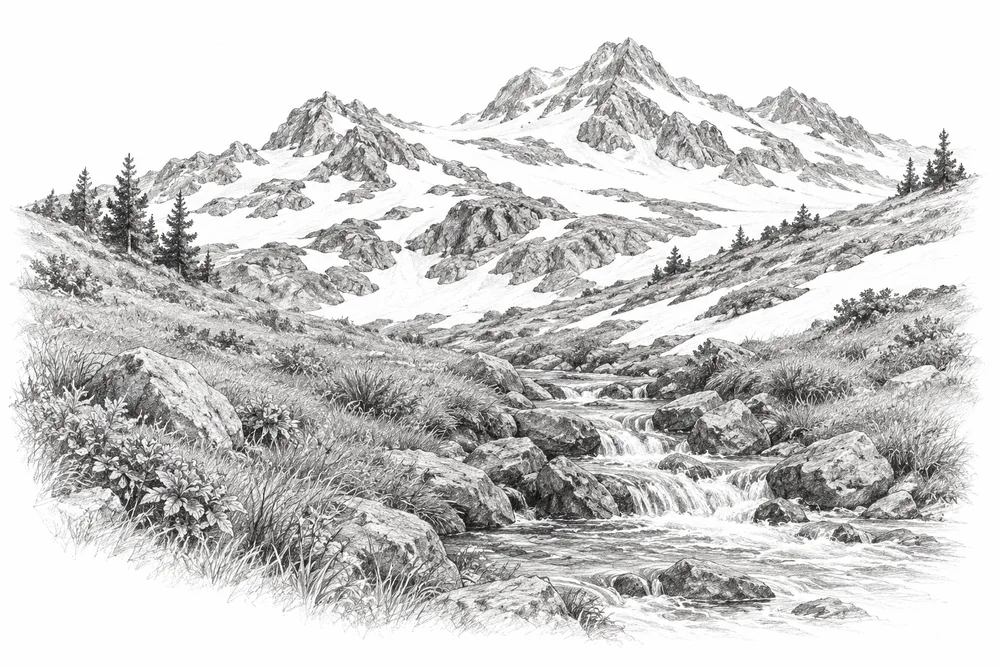
KVI-57 Local evidence
Track local snow persistence and stream seasonality; retain basin differences and years of greater snow cover.
Explore the opportunity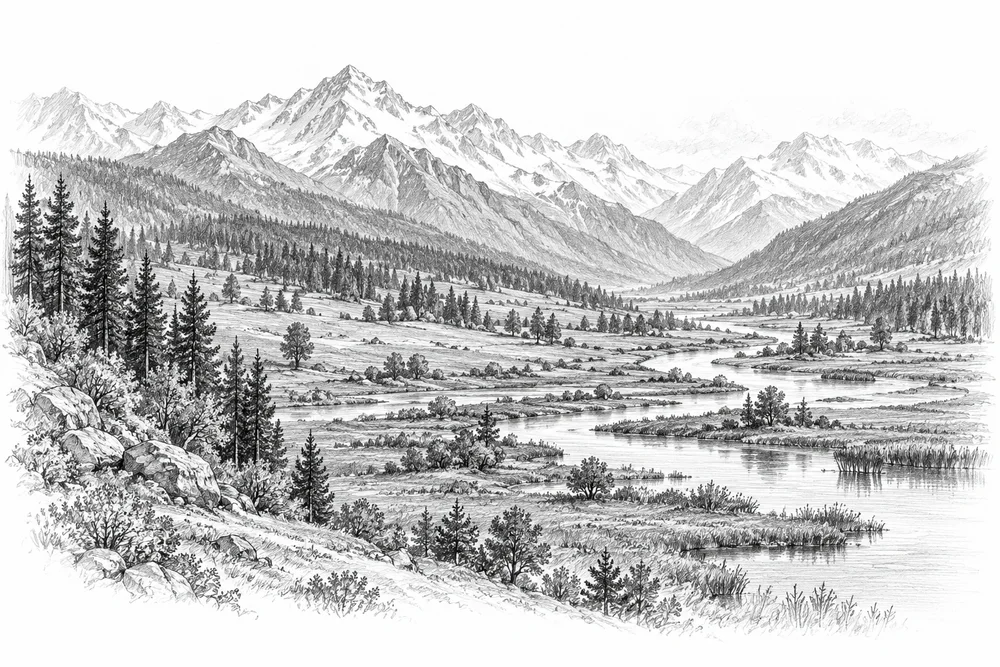
KVI-58 Local evidence
Identify where retaining wetlands, soils and vegetation could improve resilience, with site-specific hydrological evaluation.
Explore the opportunityThis is a research and project proposal. The illustration is an editorial concept, not evidence of current site conditions or completed work.