Ecuador Water Funds
Source-water partnerships and long-term catchment funding. Transfer the stewardship and finance logic; do not transplant budgets or Andean species.
KVI-58 · Climate & water
Identify where retaining wetlands, soils and vegetation could improve resilience, with site-specific hydrological evaluation.
UNDERSTANDING THE ISSUE
Land cover, wetland storage and soil condition can influence runoff, but flood and dry-season responses depend on the catchment and event. Upper Jhelum modelling offers context; it does not establish the benefit of a specific local intervention.
The first phase would turn this broad issue into a bounded site investigation. Current condition, the cause of change and an accountable local partnership would guide whether an intervention is appropriate.
Observations need a stated place, period and method to be useful.
A project can support better evidence and practical local adaptation.
Seasonality, background influences and uncertainty belong alongside any reported change.
PROPOSED APPROACH
Identify where retaining wetlands, soils and vegetation could improve resilience, with site-specific hydrological evaluation.
Identify one catchment pressure and assess its hydrological role with appropriate specialists and local users.
Develop a bounded wetland, soil or vegetation stewardship option with a stated mechanism.
Track the treated condition and relevant hydrological indicators without promising flood prevention.
Identify one catchment pressure and assess its hydrological role with appropriate specialists and local users. Keep methods, dates, source records and unresolved questions together.
Develop a bounded wetland, soil or vegetation stewardship option with a stated mechanism. Identify responsibilities, permissions, costs and continuing care before proceeding.
Track the treated condition and relevant hydrological indicators without promising flood prevention. State what would count as success, failure or a reason to change course.
Local evidence
A locally relevant topic is documented by a cited source; current severity and site feasibility remain unassessed.
Upper Jhelum; 1980-2020 land-use modelling
Publisher indexed abstract checked. Reference checked 2026-10-30. Site, time period and methods limit how this evidence can be applied to a new project.
Kashmir Valley; 1984-2021
Publisher abstract checked. Reference checked 2026-10-30. Site, time period and methods limit how this evidence can be applied to a new project.
These references offer methods to assess locally. They do not establish what will work at a selected Kashmir site.
Source-water partnerships and long-term catchment funding. Transfer the stewardship and finance logic; do not transplant budgets or Andean species.
Catchment restoration and natural flood management. Flood-channel works in Kashmir need local hydraulic and authority review; benefits are site-dependent.
KVI-56 Local evidence
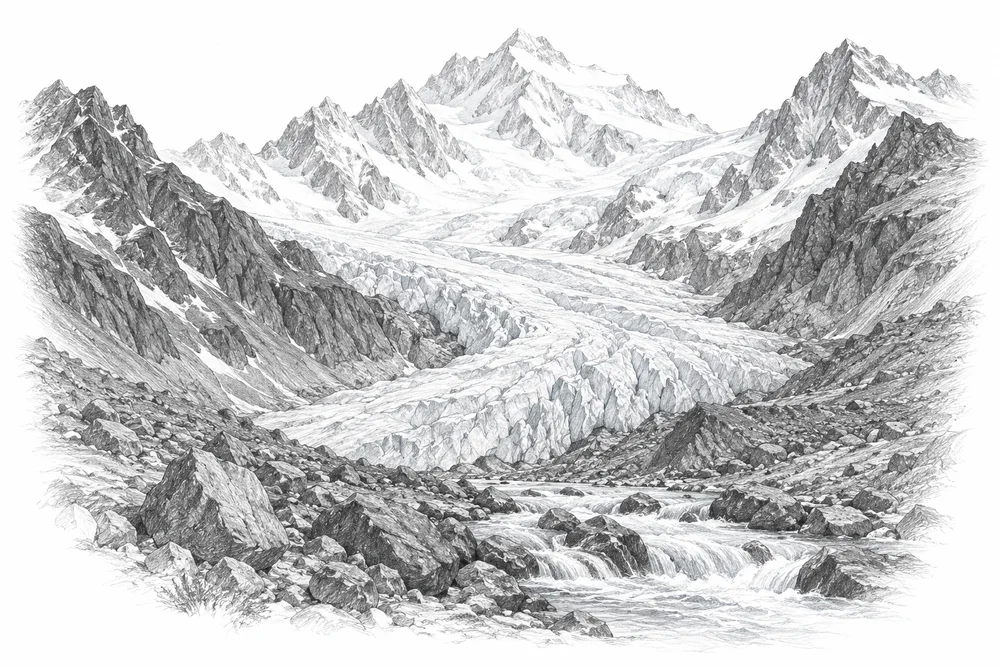
Support glacier and catchment observation partnerships and use the evidence for downstream adaptation planning.
Explore the opportunity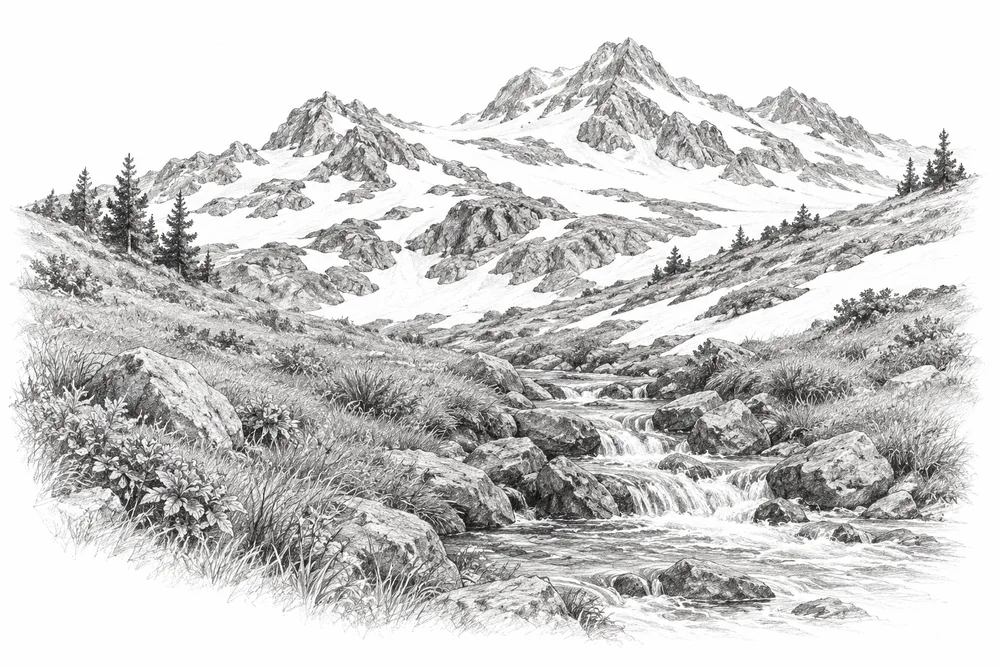
KVI-57 Local evidence
Track local snow persistence and stream seasonality; retain basin differences and years of greater snow cover.
Explore the opportunity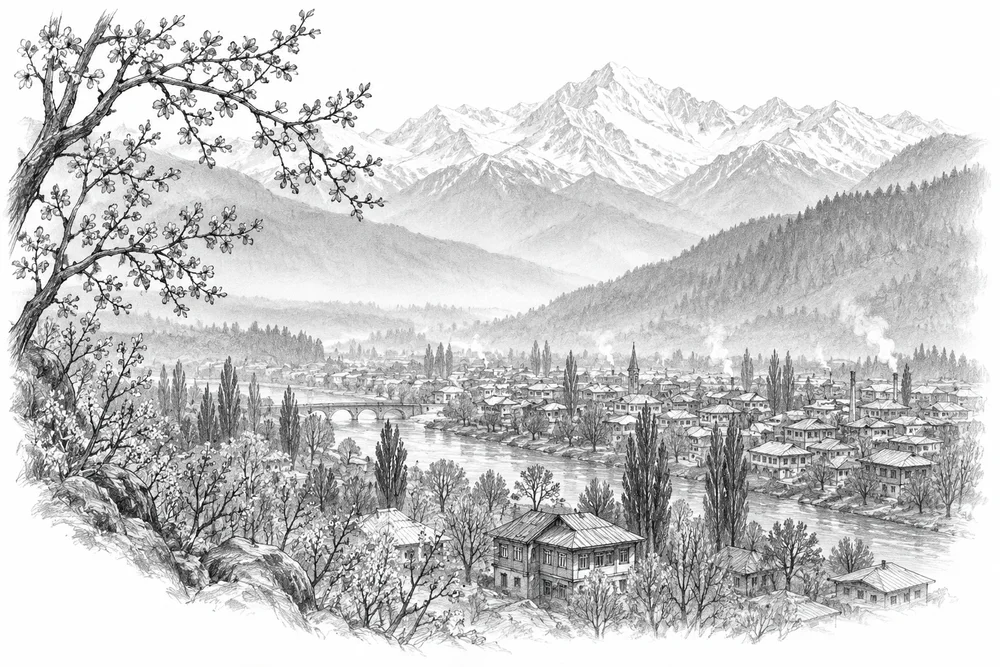
KVI-59 Local evidence
Use source evidence to choose practical local emission-reduction projects and account for transported pollution.
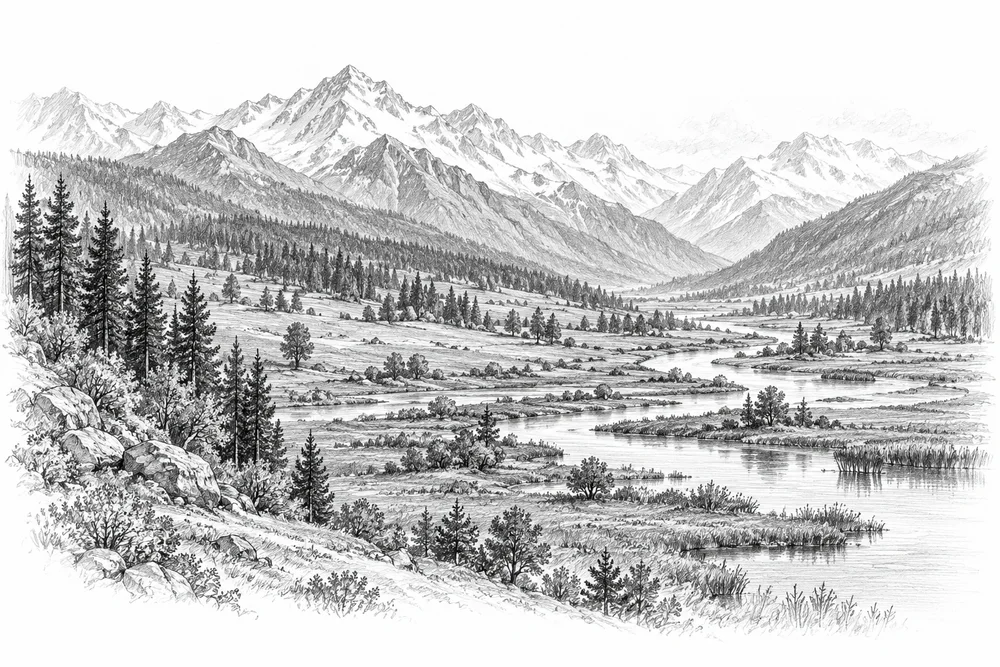
Explore the opportunityThis is a research and project proposal. The illustration is an editorial concept, not evidence of current site conditions or completed work.