Tree Planting in Schools
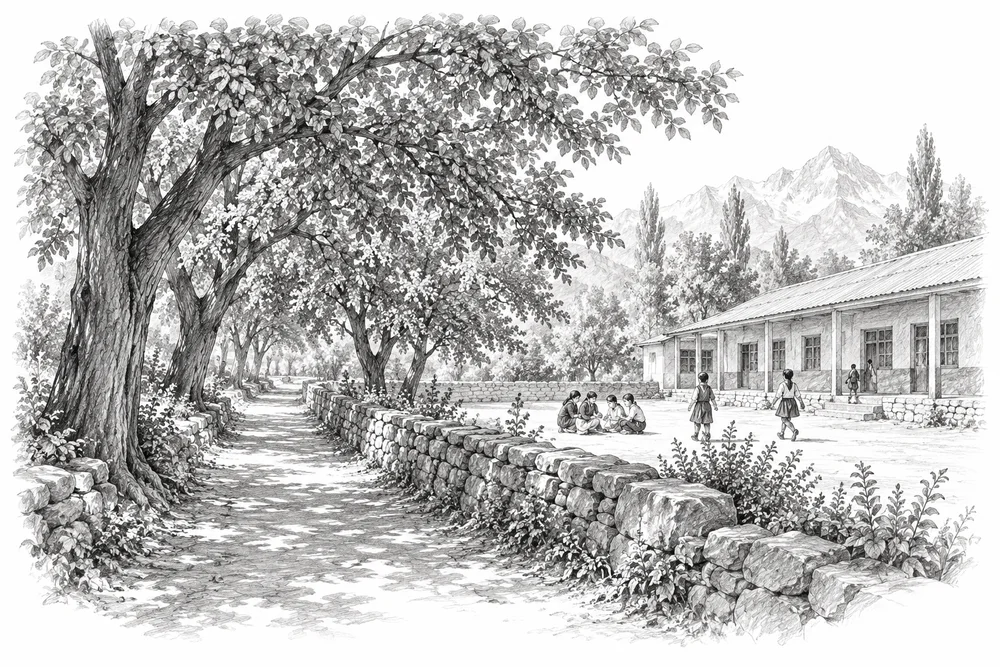
Site-specific school habitats, shade and ongoing care. Local species, water, safeguarding and maintenance matter more than a copied planting density.
KVI-43 · Towns & everyday places
Map canopy gaps and develop shade-and-habitat projects with long-term tree care at suitable public sites.
UNDERSTANDING THE ISSUE
Srinagar research links land-cover change with land-surface temperature. It supports examining canopy and surface conditions, while satellite surface heat should not be presented as the air temperature people experience or as proof of a planting project's cooling benefit.
The first phase would turn this broad issue into a bounded site investigation. Current condition, the cause of change and an accountable local partnership would guide whether an intervention is appropriate.
Trees, soil, water and small habitat patches can be considered within everyday public spaces.
Access, cultural meaning and routine maintenance should shape the design.
A named custodian and a realistic care arrangement give a small project a chance to last.
PROPOSED APPROACH
Map canopy gaps and develop shade-and-habitat projects with long-term tree care at suitable public sites.
Map existing shade and habitat, site use, utilities, soil and long-term care capacity.
Design a suitable public-site shade and habitat project with custodians and local planting expertise.
Track establishment, canopy and shade alongside consistent surface or thermal-comfort observations.
Map existing shade and habitat, site use, utilities, soil and long-term care capacity. Keep methods, dates, source records and unresolved questions together.
Design a suitable public-site shade and habitat project with custodians and local planting expertise. Identify responsibilities, permissions, costs and continuing care before proceeding.
Track establishment, canopy and shade alongside consistent surface or thermal-comfort observations. State what would count as success, failure or a reason to change course.
Local evidence
A locally relevant topic is documented by a cited source; current severity and site feasibility remain unassessed.
Srinagar; Landsat 1992-2020
Indexed primary-study abstract checked. Reference checked 2026-10-30. Site, time period and methods limit how this evidence can be applied to a new project.
These references offer methods to assess locally. They do not establish what will work at a selected Kashmir site.
Site-specific school habitats, shade and ongoing care. Local species, water, safeguarding and maintenance matter more than a copied planting density.
KVI-44 Local evidence
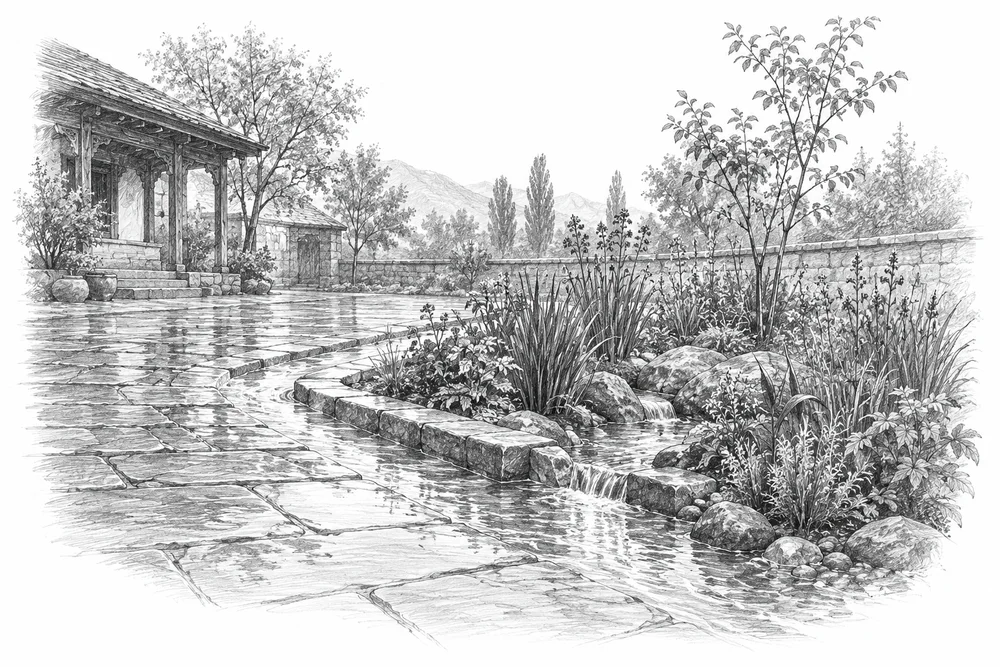
Assess opportunities to retain infiltration and surface-water routes in selected public landscapes.
Explore the opportunity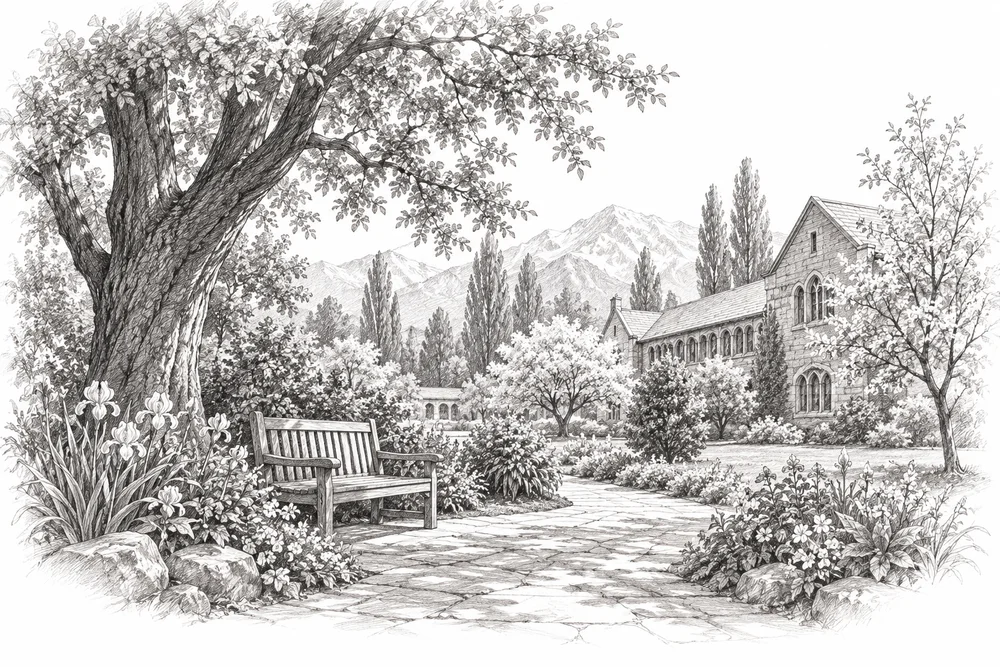
KVI-45 Local evidence
Explore appropriate habitat care in schools, parks, graveyards and campuses with their users and custodians.
Explore the opportunity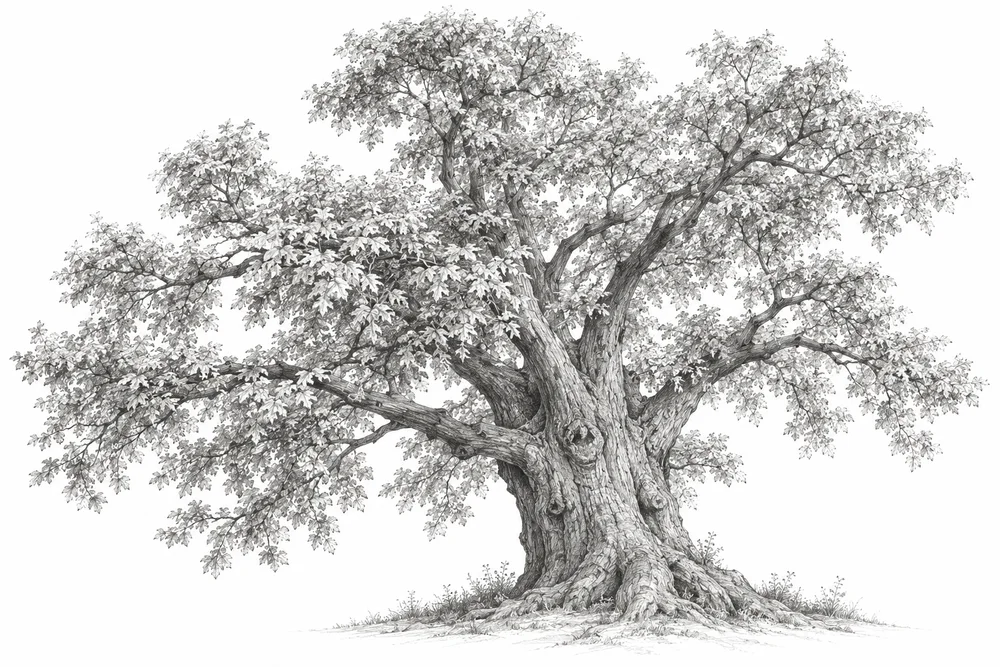
KVI-46 To investigate
Inventory valuable existing trees, including chinars where appropriate, and develop qualified tree-care plans.
Explore the opportunityThis is a research and project proposal. The illustration is an editorial concept, not evidence of current site conditions or completed work.