Community seed banks platform
Community conservation, management and exchange of local crop seed. Farmer consent, seed health and local technical partnerships are needed; no wild-seed collecting authority implied.
KVI-41 · Farms, orchards & soils
Document which traditional varieties remain in use and explore farmer-led conservation with seed institutions.
UNDERSTANDING THE ISSUE
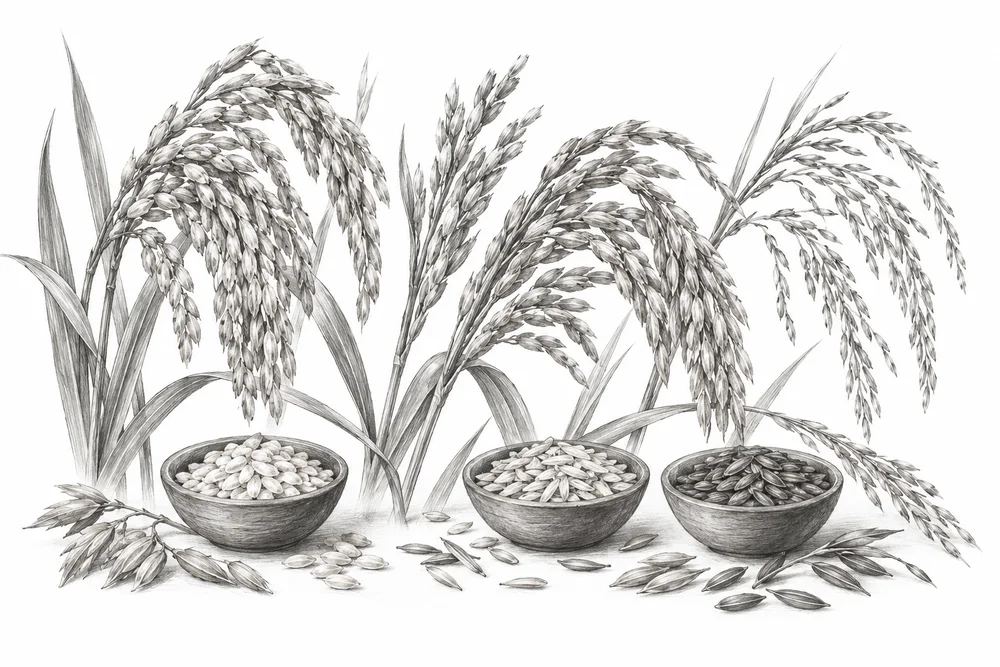
Kashmir rice germplasm research documents valuable diversity; it does not establish the current rate of loss from farmers' fields. Conservation needs to find which varieties are still grown, why people retain or abandon them and how healthy seed can remain available.
This opportunity begins with checking whether the suspected problem is present and significant at a named site. A field baseline, the relevant technical partners and local priorities would determine whether CCK should develop it further.
Soil, water, crop diversity and insects are connected parts of farming landscapes.
An intervention needs to fit the grower’s practical constraints and livelihood priorities.
Ecological observations and farm performance should both inform whether a trial is useful.
PROPOSED APPROACH
Document which traditional varieties remain in use and explore farmer-led conservation with seed institutions.
Document varieties in use and farmer knowledge with consent and seed-institution support.
Explore a farmer-led seed conservation and exchange pilot with clear governance and seed-health arrangements.
Track viable seed, participation and continued cultivation of the agreed varieties.
Document varieties in use and farmer knowledge with consent and seed-institution support. Keep methods, dates, source records and unresolved questions together.
Explore a farmer-led seed conservation and exchange pilot with clear governance and seed-health arrangements. Identify responsibilities, permissions, costs and continuing care before proceeding.
Track viable seed, participation and continued cultivation of the agreed varieties. State what would count as success, failure or a reason to change course.
To investigate
Risk or delivery gap to investigate; listed sources supply context and do not establish its local extent.
Kashmir rice germplasm
Indexed primary-study abstract checked. Reference checked 2026-10-30. Context for screening; this source does not establish the local extent of the proposed issue.
These references offer methods to assess locally. They do not establish what will work at a selected Kashmir site.
Community conservation, management and exchange of local crop seed. Farmer consent, seed health and local technical partnerships are needed; no wild-seed collecting authority implied.
KVI-37 Local evidence
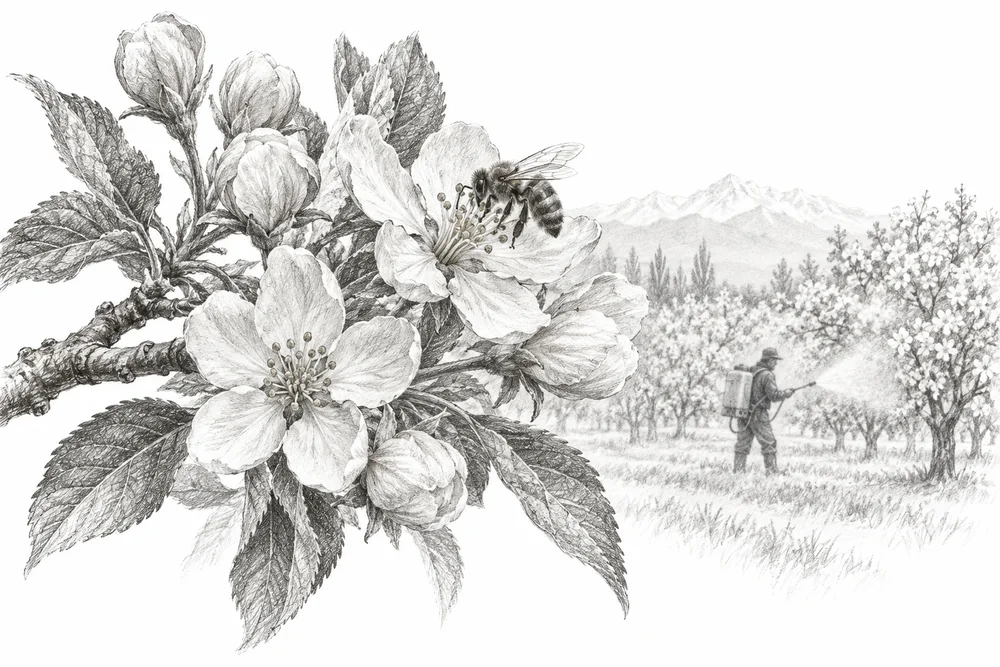
Develop farmer-led pesticide-risk reduction trials with agronomic expertise and comparable insect observations.
Explore the opportunity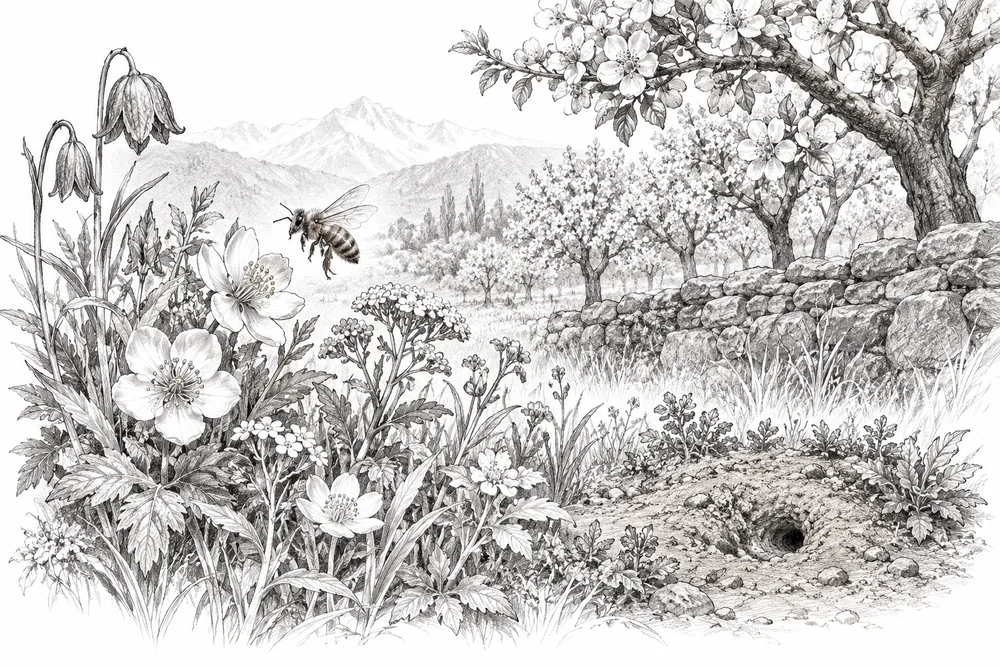
KVI-38 Local evidence
Create pesticide-protected field margins and nesting resources using locally suitable plants and seasonal surveys.
Explore the opportunity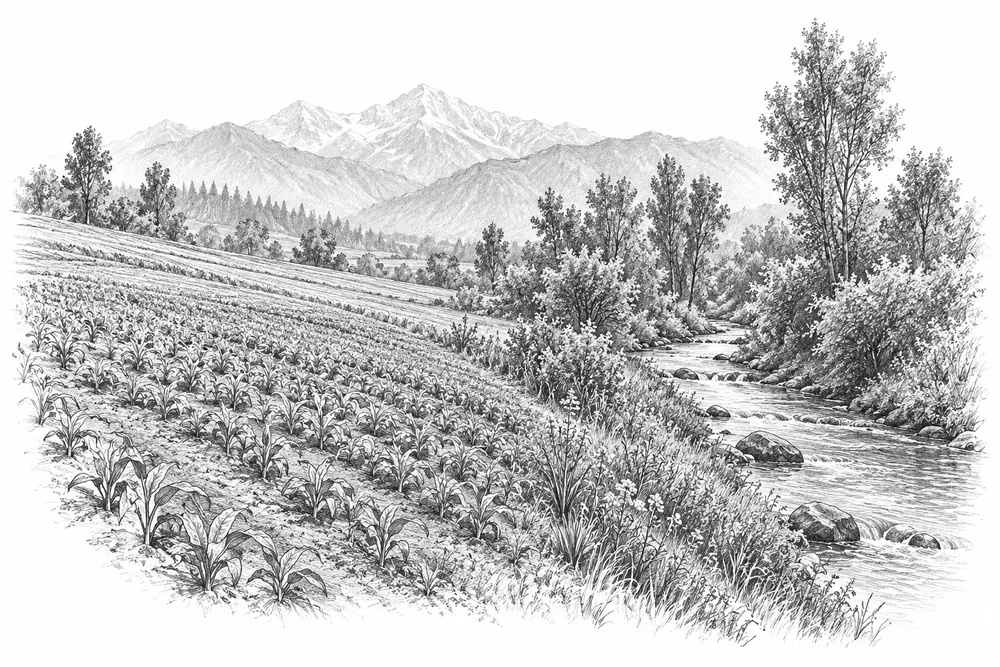
KVI-39 Local evidence
Locate likely runoff pathways and test practical input management or vegetated buffers with farmers.
Explore the opportunityThis is a research and project proposal. The illustration is an editorial concept, not evidence of current site conditions or completed work.