Guidance to Protect Habitat from Pesticide Contamination
Pesticide-safe habitat placement, drift reduction and integrated pest management. Use Kashmiri species and crop context; avoid creating attractive flowers in contaminated locations.
KVI-38 · Farms, orchards & soils
Create pesticide-protected field margins and nesting resources using locally suitable plants and seasonal surveys.
UNDERSTANDING THE ISSUE
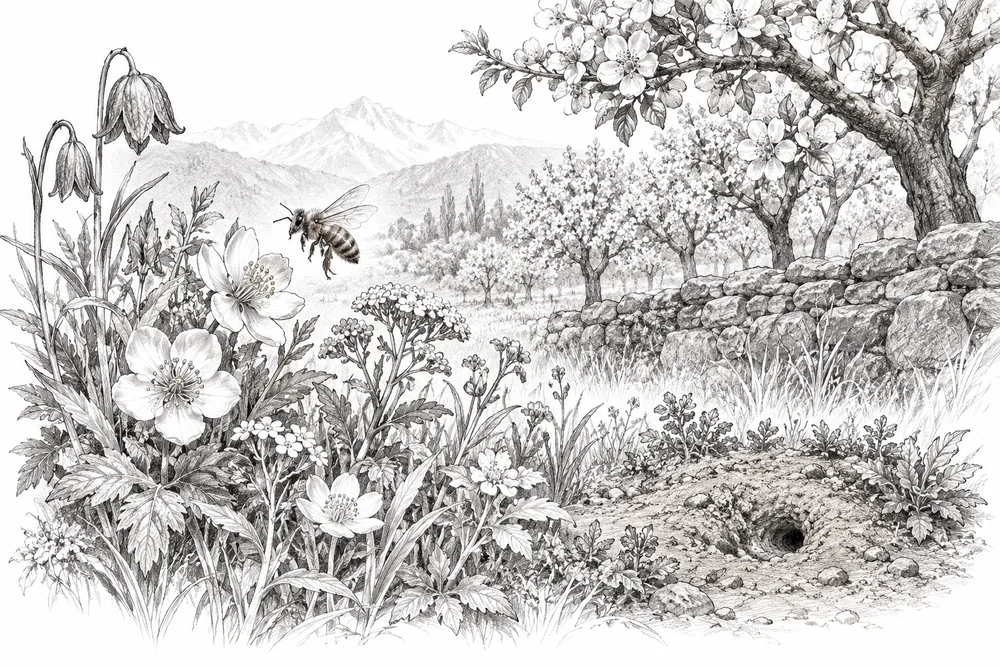
Flowering and nesting habitat can support pollinators, but attractive planting beside pesticide exposure may create additional risk. Local orchard research supports examining habitat and farm practice together before choosing species or locations.
The first phase would turn this broad issue into a bounded site investigation. Current condition, the cause of change and an accountable local partnership would guide whether an intervention is appropriate.
Soil, water, crop diversity and insects are connected parts of farming landscapes.
An intervention needs to fit the grower’s practical constraints and livelihood priorities.
Ecological observations and farm performance should both inform whether a trial is useful.
PROPOSED APPROACH
Create pesticide-protected field margins and nesting resources using locally suitable plants and seasonal surveys.
Map seasonal flower availability, nesting resources and likely spray drift around a candidate site.
Create a small protected habitat area using locally suitable plants and agreed care.
Observe flowering continuity, insect use and pesticide exposure across the relevant seasons.
Map seasonal flower availability, nesting resources and likely spray drift around a candidate site. Keep methods, dates, source records and unresolved questions together.
Create a small protected habitat area using locally suitable plants and agreed care. Identify responsibilities, permissions, costs and continuing care before proceeding.
Observe flowering continuity, insect use and pesticide exposure across the relevant seasons. State what would count as success, failure or a reason to change course.
Local evidence
A locally relevant topic is documented by a cited source; current severity and site feasibility remain unassessed.
Paired Shopian orchard and graveyard sites
Indexed primary-study abstract and methods excerpts checked. Reference checked 2026-10-30. Site, time period and methods limit how this evidence can be applied to a new project.
These references offer methods to assess locally. They do not establish what will work at a selected Kashmir site.
Pesticide-safe habitat placement, drift reduction and integrated pest management. Use Kashmiri species and crop context; avoid creating attractive flowers in contaminated locations.
Community and farmer stewardship of soil, water and native vegetation. Institutions and species differ; retain local pastoral and farmer rights.
KVI-37 Local evidence
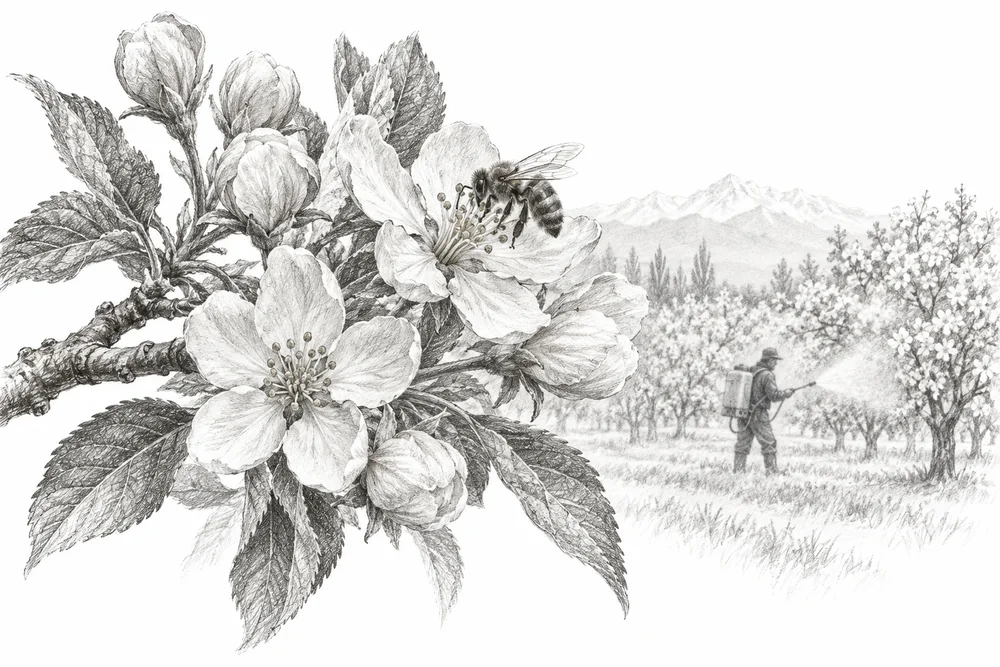
Develop farmer-led pesticide-risk reduction trials with agronomic expertise and comparable insect observations.
Explore the opportunity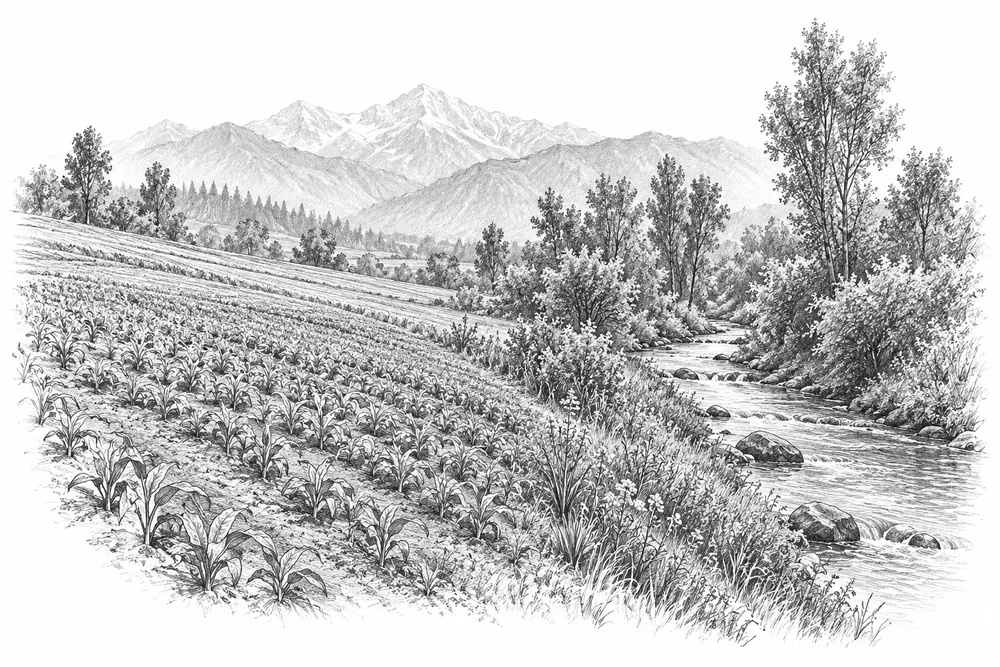
KVI-39 Local evidence
Locate likely runoff pathways and test practical input management or vegetated buffers with farmers.
Explore the opportunity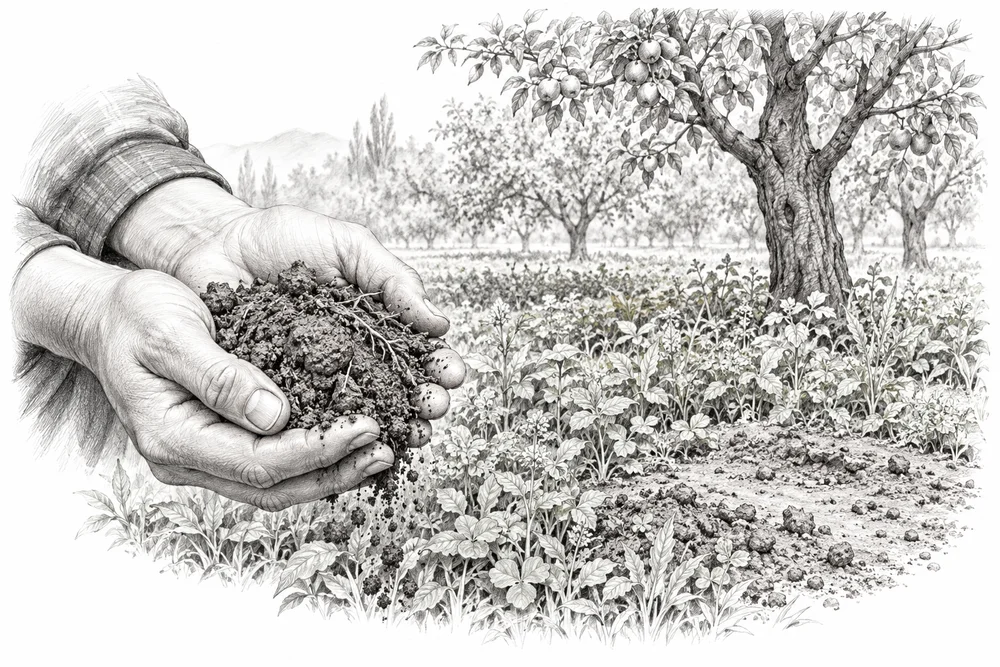
KVI-40 Local evidence
Assess soil cover, compaction and fertility at selected farms before testing cover or soil-organic-matter management.
Explore the opportunityThis is a research and project proposal. The illustration is an editorial concept, not evidence of current site conditions or completed work.