Landcare
Community and farmer stewardship of soil, water and native vegetation. Institutions and species differ; retain local pastoral and farmer rights.
KVI-40 · Farms, orchards & soils
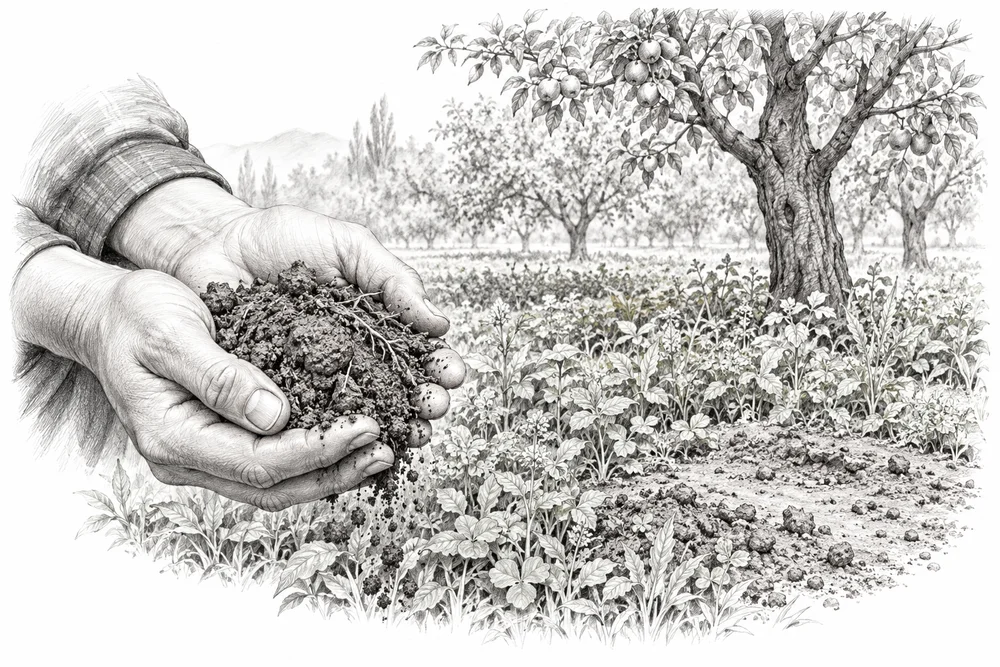
Assess soil cover, compaction and fertility at selected farms before testing cover or soil-organic-matter management.
UNDERSTANDING THE ISSUE
Soil erosion, compaction and declining cover can reduce land condition, but their importance differs by farm. A useful project starts with observed soil problems and the grower's priorities, rather than prescribing one practice for every orchard or field.
The first phase would turn this broad issue into a bounded site investigation. Current condition, the cause of change and an accountable local partnership would guide whether an intervention is appropriate.
Soil, water, crop diversity and insects are connected parts of farming landscapes.
An intervention needs to fit the grower’s practical constraints and livelihood priorities.
Ecological observations and farm performance should both inform whether a trial is useful.
PROPOSED APPROACH
Assess soil cover, compaction and fertility at selected farms before testing cover or soil-organic-matter management.
Assess soil cover, infiltration, compaction and appropriate fertility indicators with the land user.
Test a manageable cover or organic-matter practice with agronomic support.
Compare soil condition and farm performance with an untreated or usual-practice area.
Assess soil cover, infiltration, compaction and appropriate fertility indicators with the land user. Keep methods, dates, source records and unresolved questions together.
Test a manageable cover or organic-matter practice with agronomic support. Identify responsibilities, permissions, costs and continuing care before proceeding.
Compare soil condition and farm performance with an untreated or usual-practice area. State what would count as success, failure or a reason to change course.
Local evidence
A locally relevant topic is documented by a cited source; current severity and site feasibility remain unassessed.
Upper Jhelum; 1980-2020 land-use modelling
Publisher indexed abstract checked. Reference checked 2026-10-30. Site, time period and methods limit how this evidence can be applied to a new project.
These references offer methods to assess locally. They do not establish what will work at a selected Kashmir site.
Community and farmer stewardship of soil, water and native vegetation. Institutions and species differ; retain local pastoral and farmer rights.
KVI-37 Local evidence
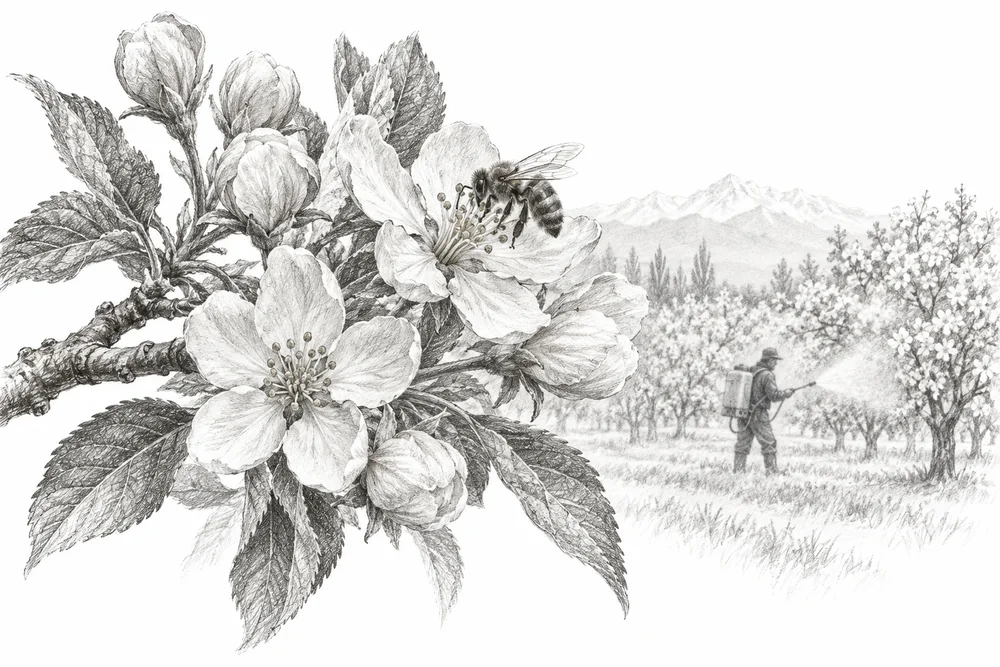
Develop farmer-led pesticide-risk reduction trials with agronomic expertise and comparable insect observations.
Explore the opportunity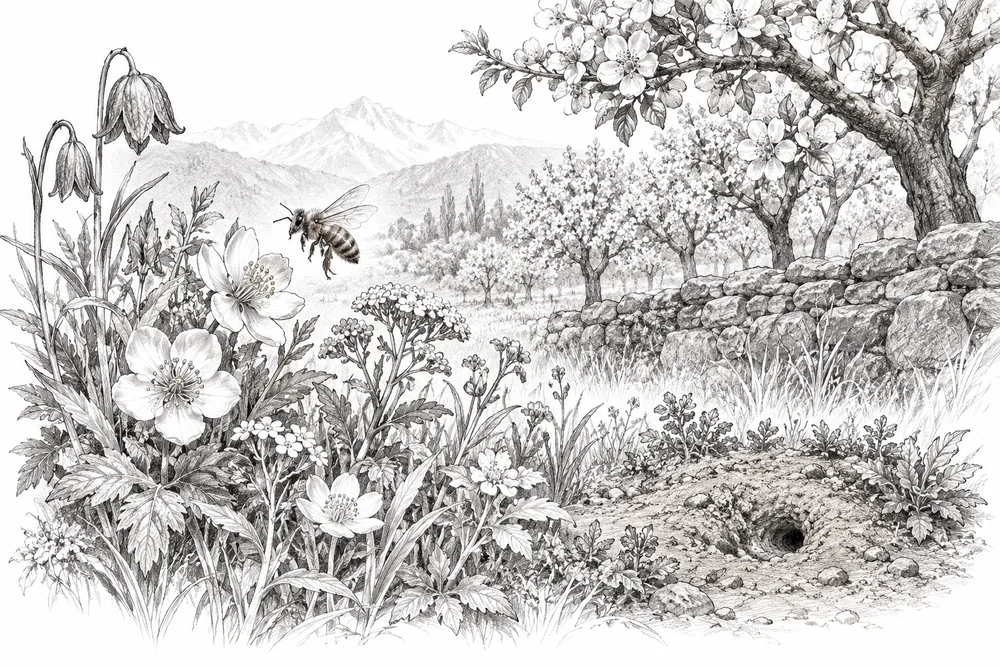
KVI-38 Local evidence
Create pesticide-protected field margins and nesting resources using locally suitable plants and seasonal surveys.
Explore the opportunity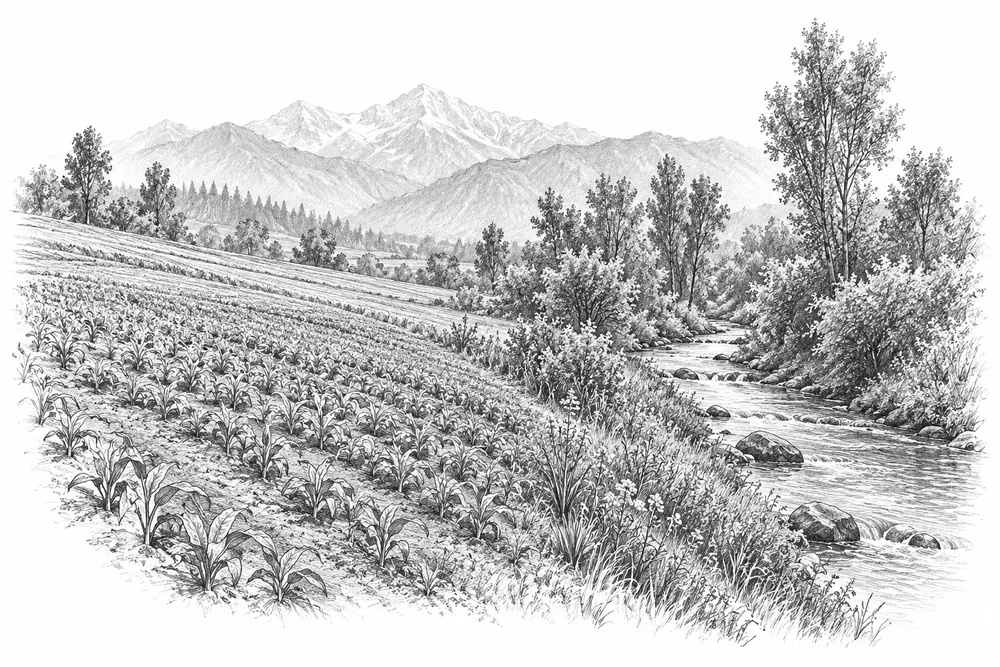
KVI-39 Local evidence
Locate likely runoff pathways and test practical input management or vegetated buffers with farmers.
Explore the opportunityThis is a research and project proposal. The illustration is an editorial concept, not evidence of current site conditions or completed work.