Farmer-Managed Natural Regeneration
Protecting appropriate existing regeneration with land users. Temperate forest regeneration and open meadow conservation require different reference ecosystems.
KVI-16 · Forests & native plants
Locate damaged forest edges and broken habitat connections for targeted protection and restoration partnerships.
UNDERSTANDING THE ISSUE
Local forest research and land-cover evidence justify examining degradation and fragmentation. Canopy area alone does not describe forest condition: understory, regeneration, land use and connections between habitat patches also shape what recovery is possible.
The first phase would turn this broad issue into a bounded site investigation. Current condition, the cause of change and an accountable local partnership would guide whether an intervention is appropriate.
Species composition, regeneration and habitat structure matter alongside vegetation cover.
The reference ecosystem and the cause of damage should guide the choice of intervention.
Plant and habitat recovery can require continuing attention beyond an initial activity.
PROPOSED APPROACH
Locate damaged forest edges and broken habitat connections for targeted protection and restoration partnerships.
Map a candidate forest edge and compare its structure and pressures with a suitable reference stand.
Develop protection or assisted recovery with the forest managers and neighbouring land users.
Repeat measures of regeneration, vegetation structure and the pressure being addressed.
Map a candidate forest edge and compare its structure and pressures with a suitable reference stand. Keep methods, dates, source records and unresolved questions together.
Develop protection or assisted recovery with the forest managers and neighbouring land users. Identify responsibilities, permissions, costs and continuing care before proceeding.
Repeat measures of regeneration, vegetation structure and the pressure being addressed. State what would count as success, failure or a reason to change course.
Local evidence
A locally relevant topic is documented by a cited source; current severity and site feasibility remain unassessed.
Four Pir Panchal forest compartments in Kashmir
Publisher and ICIMOD indexed excerpts checked. Reference checked 2026-10-30. Site, time period and methods limit how this evidence can be applied to a new project.
J&K; specific Valley discussion
Publisher indexed abstract/introduction checked. Reference checked 2026-10-30. Site, time period and methods limit how this evidence can be applied to a new project.
These references offer methods to assess locally. They do not establish what will work at a selected Kashmir site.
Protecting appropriate existing regeneration with land users. Temperate forest regeneration and open meadow conservation require different reference ecosystems.
Reference ecosystems, recovery attributes and monitoring. A framework, not evidence that a particular intervention works at a Kashmir site.
KVI-17 Local evidence
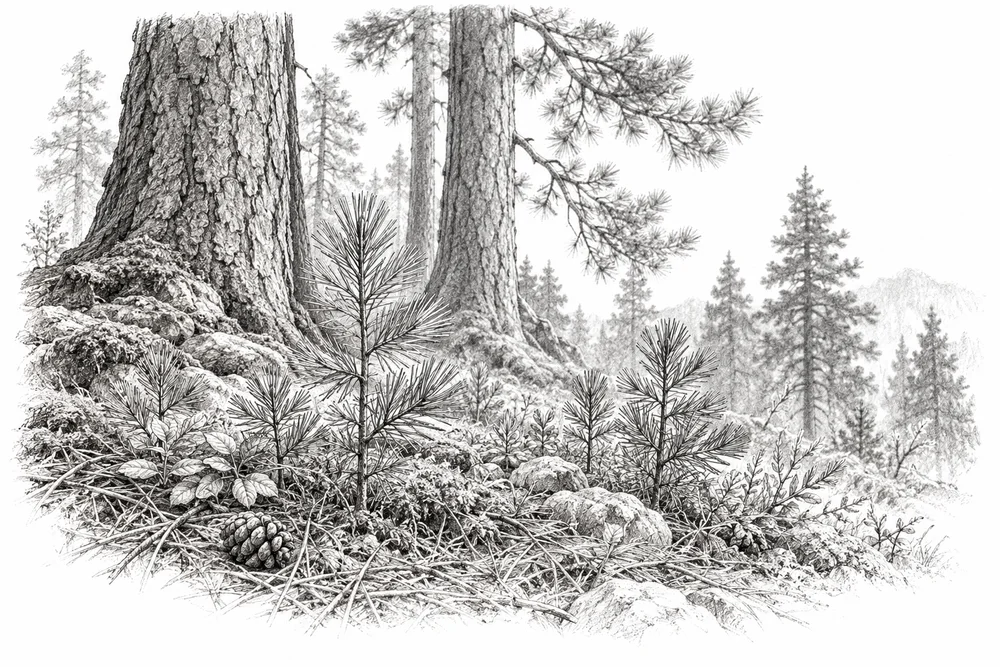
Test whether reducing the actual local stress allows native seedlings and vegetation to recover.
Explore the opportunity
KVI-18 Local evidence
Map confirmed damaging invaders, such as ox-eye daisy, and test recovery after carefully selected control methods.
Explore the opportunity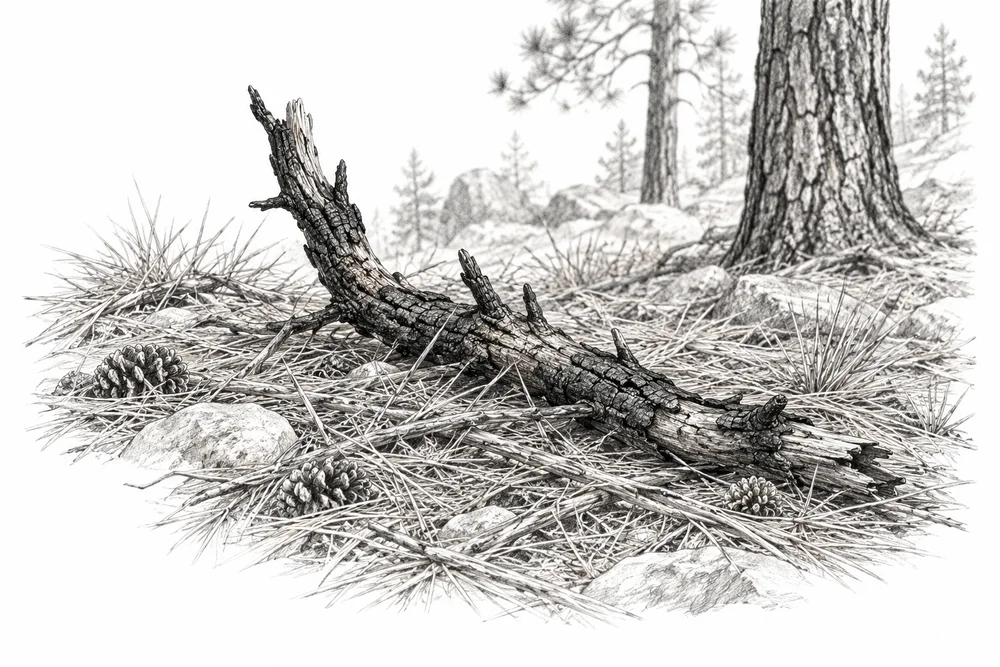
KVI-19 To investigate
Build prevention and reporting work around local fire history and forest-department planning, followed by recovery monitoring.
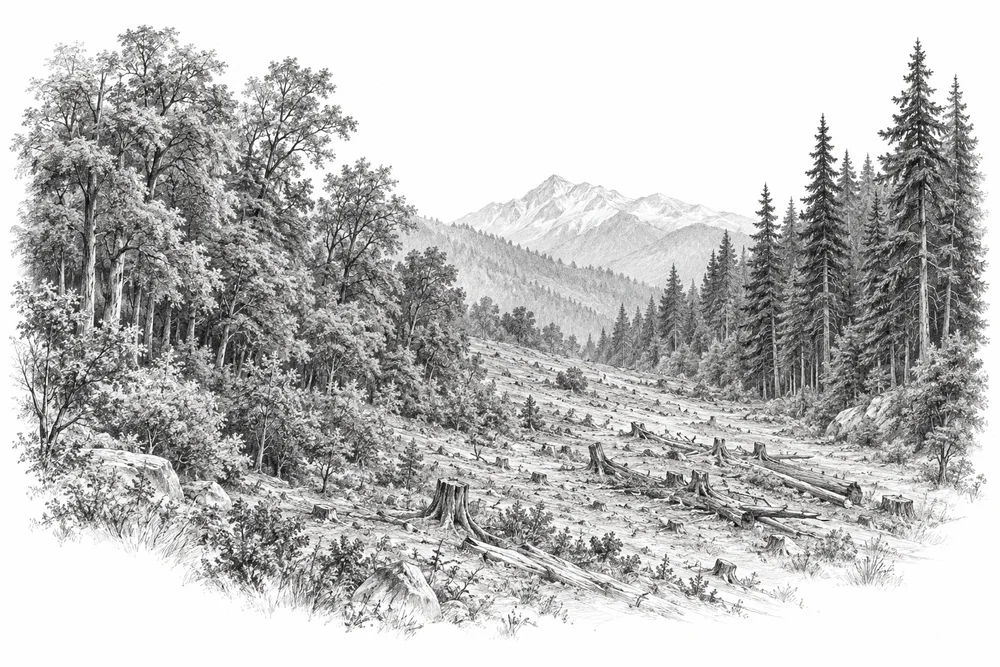
Explore the opportunityThis is a research and project proposal. The illustration is an editorial concept, not evidence of current site conditions or completed work.