FreshWater Watch
Repeatable community observations and nutrient/turbidity sampling. Volunteer observations require quality assurance and do not replace laboratory or statutory assessments.
KVI-03 · Lakes & wetlands
Trace nutrient inputs into selected lakes and test source reduction with the relevant communities and agencies.
UNDERSTANDING THE ISSUE
Excess nutrient inputs can alter lake productivity and oxygen conditions. Research at Wular and the historical Hokera record provide local reasons to investigate sewage and nutrient pathways, but they do not identify today's dominant source at a new project site.
The first phase would turn this broad issue into a bounded site investigation. Current condition, the cause of change and an accountable local partnership would guide whether an intervention is appropriate.
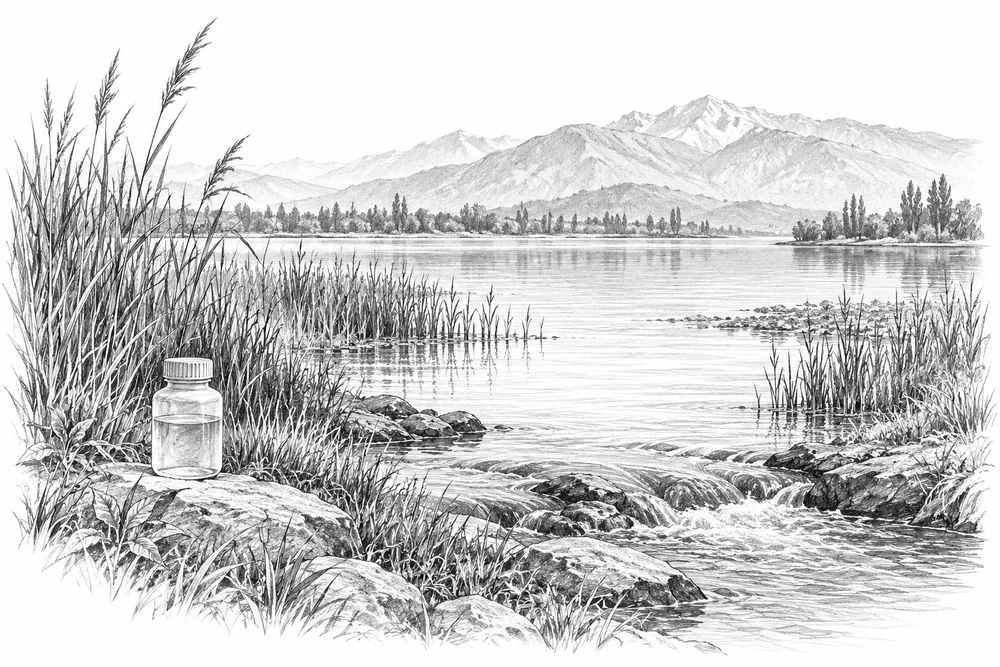
Water depth, vegetation and clean inflows help shape the habitats available to freshwater life.
Conditions at a lake edge often reflect activities well beyond the water itself.
A useful response needs people who can care for the site and follow its condition over time.
PROPOSED APPROACH
Trace nutrient inputs into selected lakes and test source reduction with the relevant communities and agencies.
Trace inflows and drainage routes and arrange seasonal nutrient and oxygen measurements with a qualified partner.
Agree a source-reduction action with the responsible households, businesses or service agency.
Track inflow nutrient loads where feasible, oxygen conditions and whether the source action stays operational.
Trace inflows and drainage routes and arrange seasonal nutrient and oxygen measurements with a qualified partner. Keep methods, dates, source records and unresolved questions together.
Agree a source-reduction action with the responsible households, businesses or service agency. Identify responsibilities, permissions, costs and continuing care before proceeding.
Track inflow nutrient loads where feasible, oxygen conditions and whether the source action stays operational. State what would count as success, failure or a reason to change course.
Local evidence
A locally relevant topic is documented by a cited source; current severity and site feasibility remain unassessed.
Wular open water; October 2018
Full text checked in initial sample. Reference checked 2026-10-30. Site, time period and methods limit how this evidence can be applied to a new project.
Hokera/Hokersar
Official indexed document excerpts checked. Reference checked 2026-10-30. Site, time period and methods limit how this evidence can be applied to a new project.
These references offer methods to assess locally. They do not establish what will work at a selected Kashmir site.
Repeatable community observations and nutrient/turbidity sampling. Volunteer observations require quality assurance and do not replace laboratory or statutory assessments.
Source-water partnerships and long-term catchment funding. Transfer the stewardship and finance logic; do not transplant budgets or Andean species.
KVI-01 Local evidence
Understand where wetlands are being lost or altered, and where protection could begin.
Explore the opportunity
KVI-02 Local evidence
Identify blocked or altered connections and assess whether restoring seasonal water exchange would improve habitat.
Explore the opportunity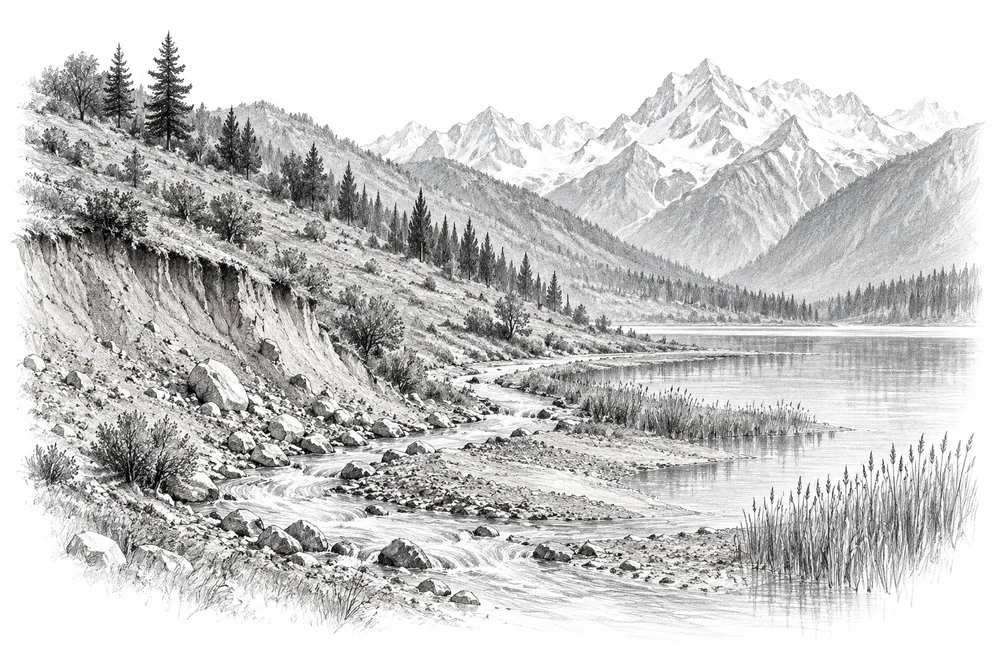
KVI-04 Local evidence
Connect lake sediment problems to upstream erosion sources and develop a measured catchment treatment pilot.
Explore the opportunityThis is a research and project proposal. The illustration is an editorial concept, not evidence of current site conditions or completed work.